Courses
Self-paced courses on Udemy that teach AI, machine learning and Python through the problems chemical and process engineers already work on.
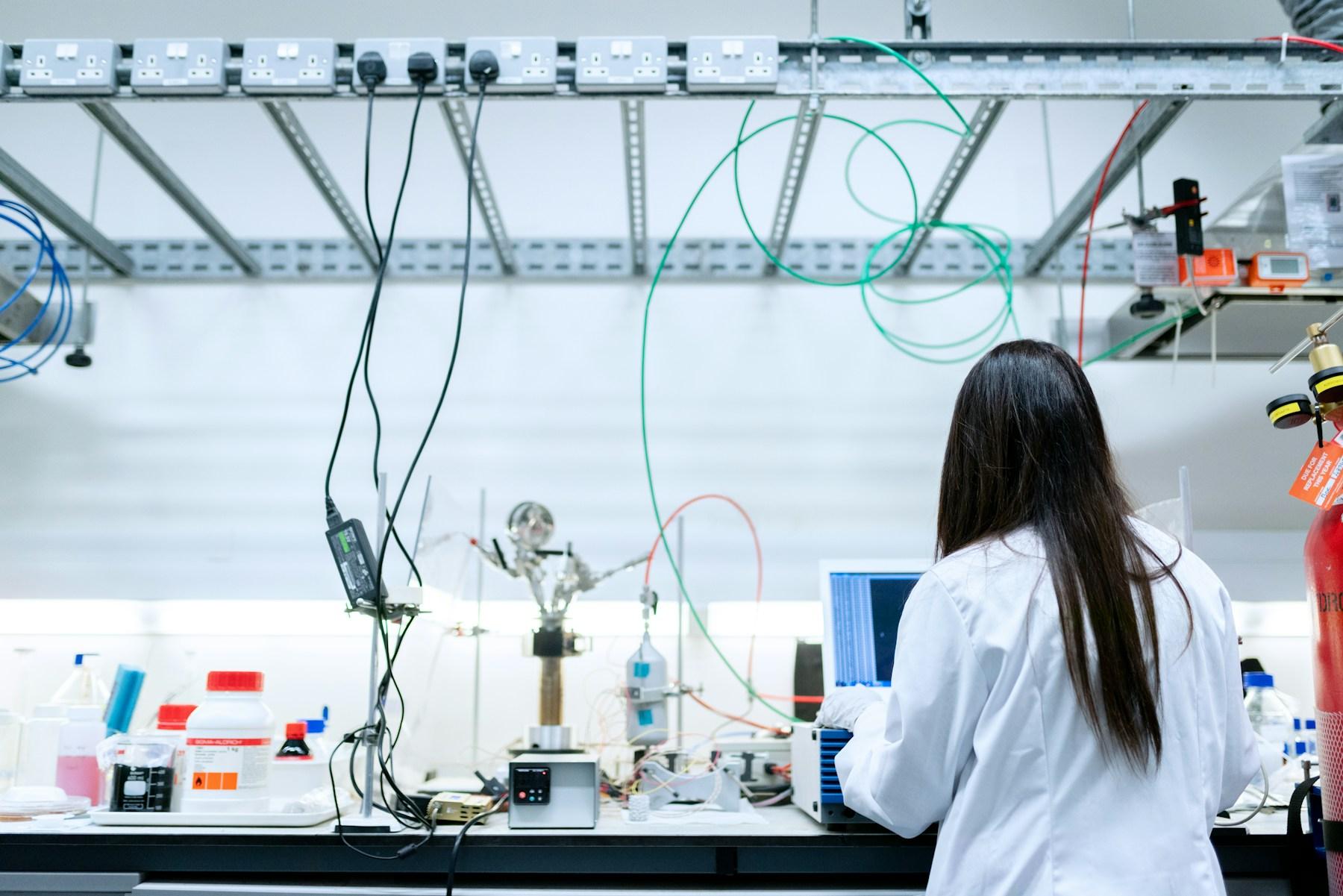
C-101 · Live on Udemy
AI, machine learning and Python for chemical engineers
A complete first course in machine learning for engineers who know the process but not yet the code. Every section opens on a plant problem, explains why it matters, then builds the model in Python and checks it like an engineer would.
- Level
- All levels
- Length
- 20 hours, 13 sections
- Modules
- 4, from Python foundations to validated models
- Datasets
- A chemical engineering dataset in every coding lesson
- Runs in
- Google Colab, in your browser
- Where
- Udemy, self-paced
What you build
- 01
Distillation column product purity
Predict purity from feed, reflux, reboiler duty and column temperatures.
- 02
NIR spectroscopy for glucose
Calibrate near-infrared spectra with ridge, lasso and PLS.
- 03
Ethylene oxide reactor faults
Classify faults from temperature, conversion, coolant flow and feed ratio.
- 04
Pipeline leak detection
Find leaks in pressure and flow data, and judge the model with the right metrics.
- 05
Wastewater treatment COD
Predict effluent COD with decision trees, random forests and boosting.
- 06
Crude oil blend clustering
Discover crude types from API gravity, sulfur, viscosity and metals.
Curriculum
Module 1: AI, machine learning and Python foundations
Where AI and machine learning fit in chemical engineering, then Python from first principles in Google Colab.
Introduction to AI, machine learning and data science
Supervised, unsupervised and reinforcement learning, the data-to-model workflow, and use cases across the process industries.
Getting started with Google Colab
Notebooks, uploading datasets and working in the browser.
Python crash course for chemical engineers
Data types, lists, loops, functions and libraries, each shown on an engineering calculation.
Cooling water pump flowrate analysis
Cooling water pumps. Functions and loops in plain Python, with unit conversion.
Heat loss in a pipe with NumPy
Insulated pipework. Vectorized engineering calculations with NumPy arrays.
ASTM D86 distillation curves with pandas
ASTM D86 distillation data. Loading, filtering, sorting and plotting a distillation curve.
Batch reactor kinetics with SciPy
Batch reactor. Solving and fitting reaction kinetics numerically.
Module 2: Data preprocessing for process data
Turning raw plant data into data a model can learn from: gaps, outliers, scales and imbalance, then a complete pipeline.
Data preprocessing and feature engineering in chemical engineering
Why plant data needs preparing, and the steps from raw historian data to a model-ready table.
Handling missing values
Distillation tray temperatures. Dropping, filling, interpolation and KNN imputation, compared on accuracy.
Handling missing values: advanced methods
Distillation tray temperatures. Edge cases in imputation and choosing a method for time-ordered data.
- Detecting and treating outliers
Distillation tray temperatures. Boxplots, z-score and IQR methods, treatment, and system-wide correlated outliers.
Normalization and scaling
Pump operating data. Min-max normalization and z-score standardization, and when to use each.
Handling imbalanced data
Compressor failure data. Class distribution, undersampling and oversampling for rare failure events.
A complete preprocessing pipeline
Polymer property prediction. Domain checks, train-test split, outlier capping, imputation, feature engineering and scaling, end to end.
Module 3: Feature engineering
Building the inputs that let a model see the process the way an engineer does.
Feature engineering for filtration processes
Filtration data. Creating physically meaningful features, and comparing models on raw and engineered inputs.
Feature extraction and selection
Heat exchanger condition monitoring. Correlation analysis, PCA and LDA, then filter, wrapper and embedded selection methods.
Module 4: Machine learning for process applications
Regression, classification and unsupervised methods, each validated the way plant models need to be.
Introduction to machine learning and model types
Where machine learning sits in the automation hierarchy, training and testing, overfitting and the bias-variance trade-off.
Linear regression
Distillation column product purity. Fitting, coefficients and residual analysis on feed, reflux, duty and temperature data.
Regularization and PLS
NIR spectroscopy for glucose. Ridge, lasso and elastic net on high-dimensional spectra, then partial least squares.
Cross-validation and hyperparameter tuning
K-fold, leave-one-out, stratified and time series validation; grid, random and nested search.
Cross-validation for reactor models
Catalytic reactor conversion. Single and repeated splits, k-fold, expanding and sliding windows, and walk-forward validation.
Hyperparameter tuning
Catalytic batch reactor. Ridge sensitivity, learning curves, GridSearchCV, elastic net and tree-based models.
Ensemble methods for regression
Wastewater treatment effluent COD. Decision trees, random forests and boosting, from unstable single trees to production-ready models.
Binary classification
Ethylene oxide reactor fault detection. From regression to classification, logistic regression and decision thresholds.
Classification metrics
Pipeline leak detection. Confusion matrices, precision and recall, ROC and precision-recall curves for rare events.
Multi-class classification
Catalyst state. Softmax regression, per-class metrics, macro and micro averaging, one-vs-rest and one-vs-one.
Unsupervised learning
Clustering, dimensionality reduction and anomaly detection when the data has no labels.
Clustering
Crude oil blends. K-means, choosing the number of clusters, hierarchical clustering and profiling the operating regimes.
Anomaly detection
Batch quality screening. Z-score screening, PCA-based process monitoring and isolation forest, compared on the results.
How each section is taught
- 01
The plant problem, and why solving it is worth money or safety.
- 02
The method, explained from first principles for engineers new to machine learning.
- 03
The Python, written step by step in Google Colab.
- 04
The checks: lab results, spec limits and the physics of the unit.
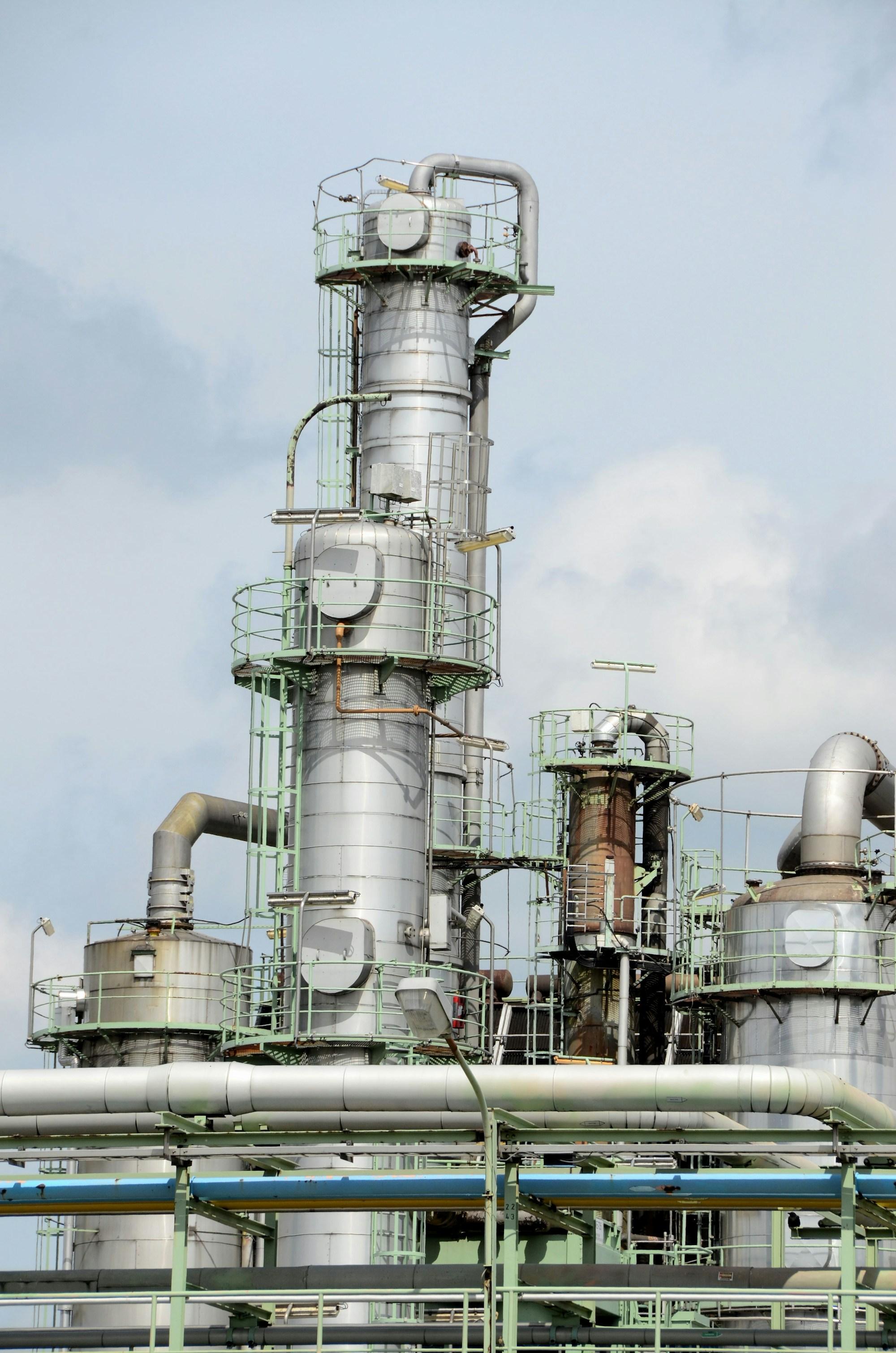
C-102 · Coming soon to Udemy
Generative AI and prompt engineering for chemical engineers: from first prompts to RAG and agentic workflows
A practical course on using generative AI in chemical engineering work, from writing and checking prompts to retrieval over your own documents and agentic workflows that drive simulation tools.
- Length
- 5.9 hours, 13 sections, 66 lectures
- Structure
- Two parts that build on each other
- Where
- Udemy, self-paced
- Status
- Coming soon
What it covers
- 01
Part 1
Prompting, verification and applied workflows, all in plain language.
- 02
Part 2
AI-assisted coding, RAG in Colab, agentic workflows with DWSIM and OpenFOAM.
Questions, briefly answered.
Do I need to know Python already?
What do I need to run the code?
Are the examples in SI or US units?
Can you train a team at our plant?
Where does our plant data go during the capstone?
What do colleges get?
Start with the problem on your plant.
Course 1 is 20 hours of Python and machine learning on chemical engineering data, at your own pace.